



A real impact on your city’s budget
443 new PIT taxpayers and over PLN 1.3 million a year in the municipality of Suchy Las — linking the Card to filing PIT locally delivers results.

Residents can access discounts, pay fees and receive council updates on their phones. The city gains new PIT taxpayers and its own flagship project for the current term in office.
Benefits for your city
Over 70 local authorities, nearly one million users. The Resident Card makes a difference to your city’s budget, communication and reputation — with results visible within a single term in office.
443 new PIT taxpayers and over PLN 1.3 million a year in the municipality of Suchy Las — linking the Card to filing PIT locally delivers results.
An app bearing your city’s name — a tangible result of digital transformation, ready to showcase to the council, media and residents.
The Card is available in the app and as a physical card for children and older residents, so the whole family can enjoy the benefits.
Push notifications go straight to residents’ phones — reaching people that websites and social media miss.
The app appears in the App Store and Google Play under your city’s name, with its coat of arms — helping your city build brand recognition.
Programmes for older residents, families and pupils in one system for managing entitlements — with real data on who uses them.
Local businesses join as partners and reach residents with discounts. The city supports entrepreneurs at no cost.
Over 70 local authorities, nearly one million users and the Innowacyjny Samorząd 2025 (Innovative Local Government 2025) award for Stalowa Wola and Suchy Las.
Residents can access news, an events calendar and a calendar of key municipal dates with reminders — all in one place. The council sends push, email or SMS notifications, with the option to target specific groups or neighbourhoods. In the event of a disruption, the same channel delivers alerts faster than the website or social media.
The Resident Card can bring public transport, paid parking zones and municipal payments together in one place. Residents can buy tickets, benefit from discounted fares or free travel where eligible, and pay for parking — all in one app.
The system can integrate with existing transport and parking solutions, allowing the local authority to use its current infrastructure while adding support for Resident Card entitlements.
The Resident Card helps increase local personal income tax (PIT) revenues. In the municipality of Suchy Las, the Card encouraged residents to file their tax returns locally, bringing 443 new taxpayers and over PLN 1.3 million in additional municipal revenue within a year.
Participatory budgeting and public consultations make it easy for residents to take part in city decision-making. The council can manage the entire process digitally and access detailed statistics, participation figures, results and data on resident engagement.
The same system lets you run programmes for older residents, families and pupils, grant entitlements and manage access to municipal benefits and services. The Resident Card is available both in the mobile app and in physical form, making the programme easy to use for children, older residents and people who do not use a smartphone.
The Resident Card connects with Poland’s digital infrastructure — Profil Zaufany, mObywatel, e-Doręczenia and the REGON and TERYT registers. Alerts from RSO and IMGW can be delivered automatically, directly to residents.
The platform also integrates with systems already used by the local authority and its institutions — including systems for public transport, paid parking, ticketing, sports facilities and bike sharing, as well as payment providers.
We have experience integrating with EMPROX, ProPark, Trimar, FP Soft, MBS, LSI, TTSoft, Fitnet, Bilety24, Nextbike, BikeU and many others. The API module also allows us to connect the Card to additional systems used in the city.
We design, implement and maintain the integrations, so your council’s IT team does not have to build or expand connections between systems itself.

Digital and plastic versions — one system for verifying residents’ entitlements across all city programmes and services.

A programme of municipal discounts and offers from local businesses. Partners join online, and residents see the offers in the app.

Council news published once — instantly visible in the resident app and on the city website.

A city events calendar with online registration and a push notification before each event starts.

Send push notifications, SMS and email to selected groups of residents or neighbourhoods — from one admin panel, without additional tools.

Payment deadlines, application periods and consultations in one calendar, with automatic reminders on residents’ phones.

Resident Card programme matters handled online — forms automatically fill in residents’ details from the mObywatel app.

A family account where each family member has their own card and entitlements — a parent manages everything in one place.

Municipal facilities, programme partners and building accessibility for people with disabilities — in one map layer.

Residents report faults from their phones, with a photo and location, while the council tracks repair status in the admin panel.

The entire process, from project submissions and voting in the app to publishing results and implementing projects.

Online surveys and voting with real participation — instead of empty meeting rooms and paper forms requiring manual data entry.

Buy public transport tickets in the app, with discounts from Resident Card programmes applied automatically.

Pay for parking in paid parking zones from your phone, with free digital tickets for eligible city residents.

A waste collection schedule for each address, with a push notification the evening before each waste type is collected.
Recycling centre access linked to residents’ accounts — no paper tracking of disposal limits.

Administrative fees paid online in one place — simply scan the payment notice and the system fills in the rest.

Access to attractions and discounts for visitors, linked to the tourist tax — increasing visitor spending in the city.

Ready-made walking, cycling and driving routes with descriptions and multimedia, displayed on an interactive map.

Interactive quests that turn sightseeing into active city exploration — for residents and tourists.

Automatic translation of the entire app into languages selected by the council — making city services accessible to foreign nationals too.

Hazard warnings from RSO and IMGW delivered automatically to residents, with no work required from the council.

An AI chatbot that answers residents’ questions about city services 24/7.

A built-in API developed in line with industry standards, enabling our products to connect with the council’s specialist systems and solutions from external partners.
Our projects
Nearly one million residents actively use city apps built on our platform.
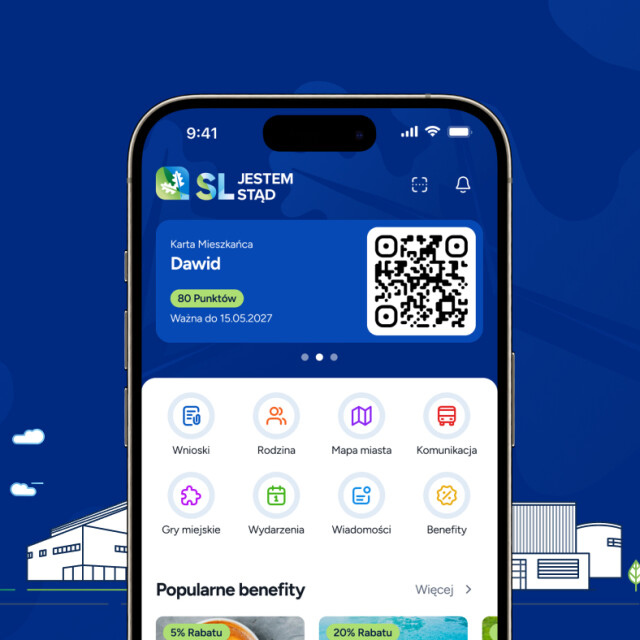
Suchy Las Municipality
The Resident Card that generated PLN 1.3 million in PIT revenue for the municipality in one year
In Suchy Las, the Resident Card linked access to a benefits programme with filing personal income tax (PIT) where residents live. In the first year, 443 more taxpayers filed locally, generating an additional PLN 1.3 million in annual revenue. The implementation included the core modules, waste collection schedules, integration with the National Electronic Identification Node, the city calendar and the alerts module. The project received the Innowacyjny Samorząd 2025 (Innovative Local Government 2025) award.
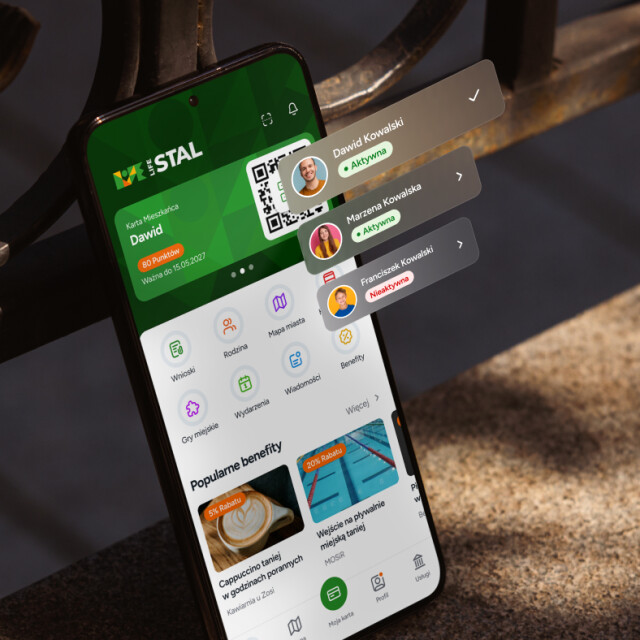
City of Stalowa Wola
A Resident Card offering free public transport, reaching 63% of residents
In Stalowa Wola, the Resident Card launched alongside free public transport for residents holding a Card. The result: in under two years, the Card reached 63% of residents — one of the highest adoption levels achieved across our implementations in such a short time. The project received the Innowacyjny Samorząd 2025 award.
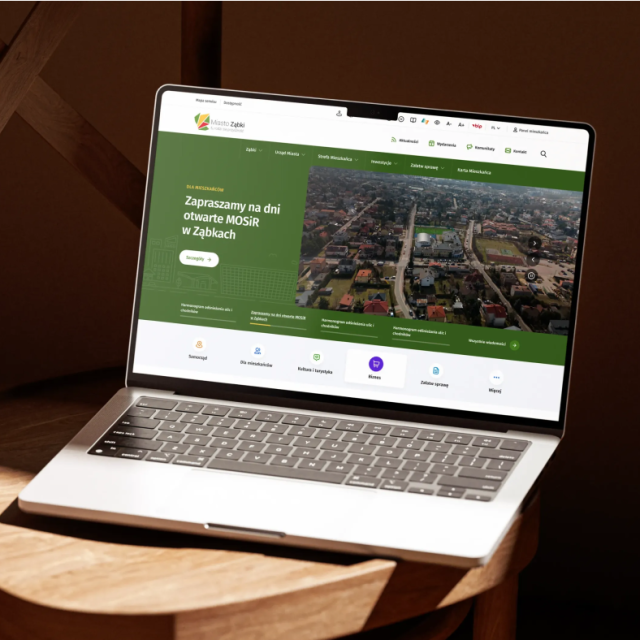
City of Ząbki
Ząbki: our first Resident Card rollout, now with over 80% of residents holding an active Card
We launched our first Resident Card in Ząbki in 2020. After years of development, over 80% of residents now hold an active Card — the highest reach across all our implementations. The Card combines a strong benefits programme with free public transport and benefits for parking and swimming pools, all in one ecosystem with the council website and BIP.
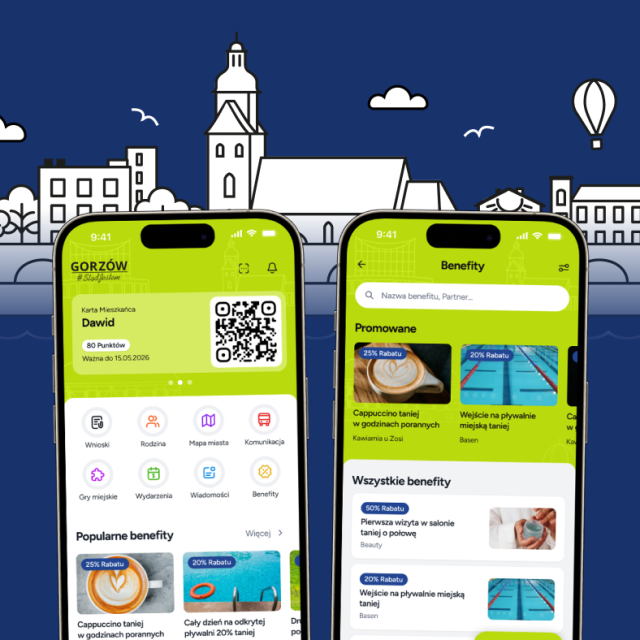
City of Gorzów Wielkopolski
In Gorzów, the Resident Card caught on faster than anywhere else
In Gorzów Wielkopolski, the Resident Card reached over 50% of residents in under six months from launch — one of the fastest rollouts to achieve this reach among cities of a similar size. Free public transport for cardholders drove activation, while programme eligibility was linked to filing PIT locally. The implementation included the core modules, waste collection schedules and public consultations.
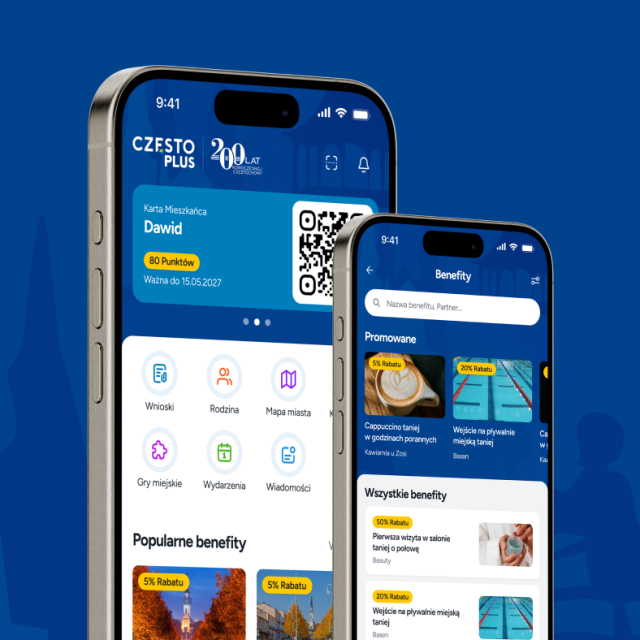
City of Częstochowa
In Częstochowa, the Card does it all: tickets, routes, alerts and issue reporting
Częstochowa, one of Poland’s largest cities, chose a Resident Card with an extensive range of modules from the outset. The implementation included public transport tickets, tourist routes, alerts, digital issue reporting and waste collection schedules, with secure sign-in through the National Electronic Identification Node. Card eligibility is linked to filing PIT locally.
FAQ
Usually 8–12 weeks from order to launch, following a clear schedule with firm deadlines. Our implementation model has been proven in over 70 local authorities — we follow a process that has delivered results time and again. Your city gets a working system within the current term in office.
In many local authorities, it does. The key is linking benefits to filing personal income tax (PIT) locally. In Suchy Las, the number of PIT taxpayers increased by 443 in one year, compared with just 35 new residence registrations — an effect of the programme, not migration. According to municipal data, this generated over PLN 1.3 million in additional annual PIT revenue — many times the cost of maintaining the system.
The cost depends on the scope: the number of modules, the size of the local authority and the card format (digital or plastic). We use our Baza + approach, so your city starts with a core package and spreads spending over time, rather than paying for everything upfront. We provide a tailored quote after a free consultation — with no obligation.
No. The Resident Card does not compete with the council’s specialist systems — it complements them and brings them together in one clear channel for residents. Wherever possible, we integrate with your existing systems so data does not have to be entered twice.
The city’s brand. In the App Store and Google Play, residents find the app under the city or programme name, with its coat of arms and visual identity — rather than the provider’s name. It’s your product, building recognition for your city.
They can use a plastic card and access the full website in their browser. The programme works for both digitally confident residents and those who prefer a traditional option — no one is excluded.
Yes. The app and website meet WCAG accessibility requirements, and personal data is processed in accordance with GDPR. This is standard in every implementation, not a paid add-on. We also help the council prepare the programme documentation.
Very little. Integrations with national infrastructure and payment systems are already available and maintained by us. The council’s role is to manage the modules’ content and operation through the admin panel, rather than handle programming tasks.
No. With our Base+ approach, we start with a package tailored to the city’s priorities and add more modules in stages. This spreads costs over time, avoids overloading council staff and gives the city a fresh opportunity to communicate its progress with each module launch.
Call any of our clients and ask them directly how we perform. Over 70 local authorities use our solutions — we’ll point you towards cities similar to yours, so you can speak to them without us taking part.
Yes. An API module is included as standard with the Resident Card. We build our API using widely adopted industry standards, making it easier for external systems and technology partners to integrate.
This allows the Resident Card to connect with local services and external systems, such as:
The API also enables large datasets to be retrieved — always within the scope agreed and approved by the relevant local authority, which remains the data controller. Technical documentation for the API is available on request via the local authority.
We actively support our partners with both the technical and implementation aspects of integration.
Together, we’ll develop a digital transformation plan for your local authority. During the call, we’ll discuss what the implementation could include and share examples of similar projects. No brief required and no obligation.